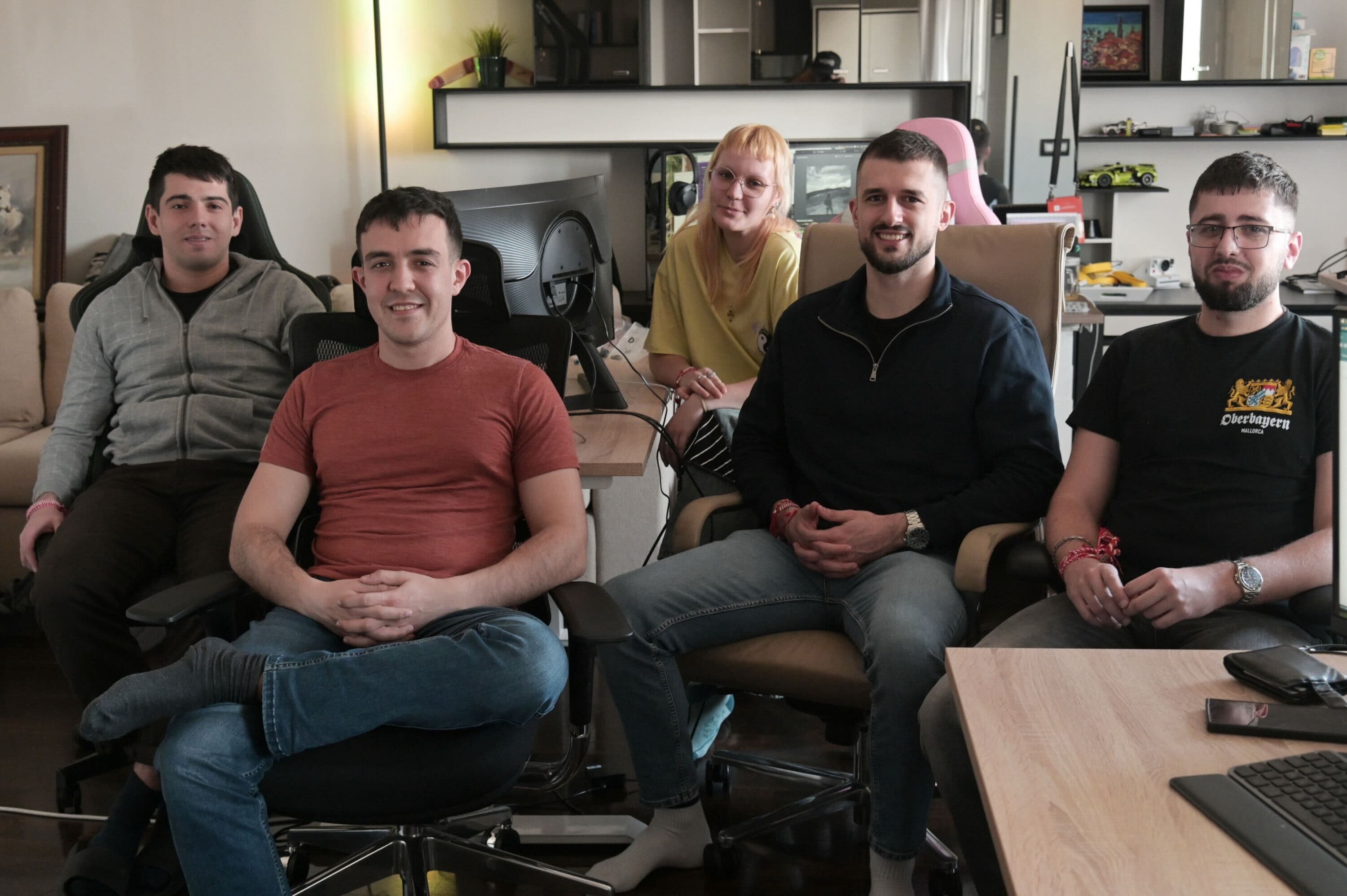
"Look, none of that matters when the guy who knows where truly our orders are, is on vacation and the answer is somewhere in his inbox."
A little over a year ago, I sat down for coffee with a Fortune 500 supply chain exec after a conference. Me and the team had been building tools for dynamic supply chain planning and forecasting, and I was excited to show him what we had.
He wasn't impressed. Everyone's planning off of bad data, he told me. You're building forecasts based on what already happened, but if a supplier goes under or a delivery is late, you don't find out until it's too late. And by then, you're scrambling.
I asked how they kept track of what suppliers are doing. He laughed. "We're dinosaurs. It's all email."
That conversation changed what we were building. We started talking to more people - procurement leads, operations directors, supply chain VPs across industries. And every single one told us some version of the same story. Different company, different product, same mess: the critical information about what's happening with their suppliers lives in email inboxes and spreadsheets.
A $26 trillion global supply chain, coordinated through Outlook and Excel.
Today, we're announcing our $3.9M seed round backed by Y Combinator, Category Ventures, Ritual Capital, e2vc, and others to build the AI coordination layer for manufacturing and distribution supply chains.
Why Now
You may have felt drawn to geopolitics recently - tariffs and wars seem to be the hot topic on X, LinkedIn, traditional media, and everywhere else.
This is reshuffling everything right now and the stakes are getting higher - a manufacturer that had 100 suppliers in 3 countries that they've worked with for years may now be forced to onboard 50 new ones with the same tools at hand they've had for ages.
You can't just throw more people at the problem, without sharing the tribal knowledge, without better tools, and expect things to fix themselves.
$1.6 trillion. That's how much businesses will lose this year because of supply chain disruptions they didn't catch and act on in time.
Over the past few weeks, we were deployed with an aerospace customer in the US and saw this firsthand. We saw how RFQ cycles were dragging on so long that quotes would expire before anyone even made a decision - costing them millions in restarted sourcing rounds and missed pricing windows, simply because no one could keep up.
Something has to give.
So we built it
Mandel connects to your procurement and supply chain inboxes - Outlook, Gmail, whatever you're using - and starts reading every supplier email, every order confirmation, every quote and invoice, every buried follow-up that says "half your order is on backorder." It understands what it's reading, cross-references it against your POs, RFQs, quotes, and even contracts, and finally, it acts - escalating issues to the right person in the company, reconciling documents and finding costly mismatches, automatically following up with suppliers.
And all of that is plain English rules guided by your SOPs you can set up in minutes and let the AI learn the rest.
When the gears started spinning
I remember the first time it clicked for us was when we were deployed with a very popular medical device startup that kept getting blindsided by delays. The workflow (or lack of) was maddening - supplier would confirm a PO, then two days later bury in a follow-up that lead times had slipped and half the items were on backorder. By the time someone actually read that email, they'd already lost weeks and engineers were pissed that they would miss their deadlines (again).
We were working on a solution for this and I remember staying until 5 AM that night with my first engineer updating guidelines and systems when we finally cracked it. Next morning the agent started capturing these backorders and acting on them the moment they hit the inbox - pulling alternative suppliers, gathering quotes - our customer's team went from scrambling for weeks to making decisions in hours. The look on their supply chain lead's face when she realized she could actually get ahead of problems instead of reacting to them - that's when I knew we had something real.
But actually we've noticed that much of what we catch is even quieter than that. A large European pharmaceutical company we work with had a workflow for document reconciliation that was quite scary - print the PO, print the invoice, pull out a ruler, and make sure everything aligns over pen and paper.
So logically, nobody really wanted to do it, and very costly mistakes were common.
How costly? Well, one week last September, they were receiving invoices from a big supplier worth over €6,000,000 - Mandel spotted a 1% pricing discrepancy against their negotiated contract terms - €60,000, sitting in an inbox, that no one would've manually cross-referenced.
Multiply that across hundreds of invoices and orders a month, and you start to see the scale of what's been invisible.
Today, one procurement manager running Mandel handles the coordination load that used to bury a whole team - hundreds of supplier threads a day, across time zones.
As of now, we have processed over $1B in material spend across aerospace, pharma, and industrial manufacturing and distribution, and every deployment has taught us something new about how supply chains actually break.
How We Built It
I learned something very important through our customers - you need to earn the right to solve hard problems, especially at the enterprise scale. You cannot build a revolutionary product for the physical world from behind a desk.
Be on the factory floor.
This past year, we sat in our customers offices, walked their floors, and watched how their teams actually work - from the workarounds to the tribal knowledge and the 4 AM emails to suppliers in different time zones.
One way or another, you have to live in the customer's world in order to build for it.
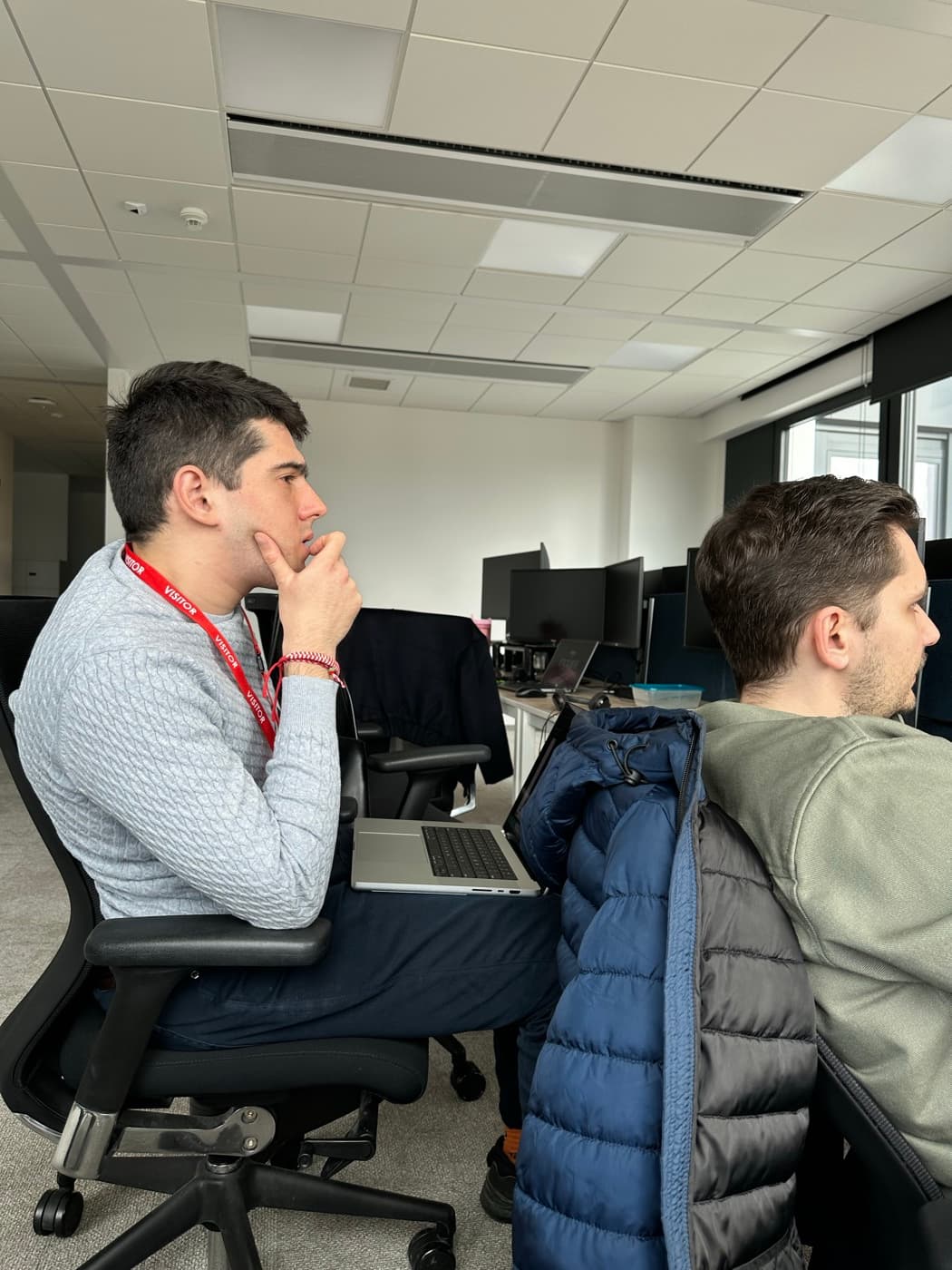
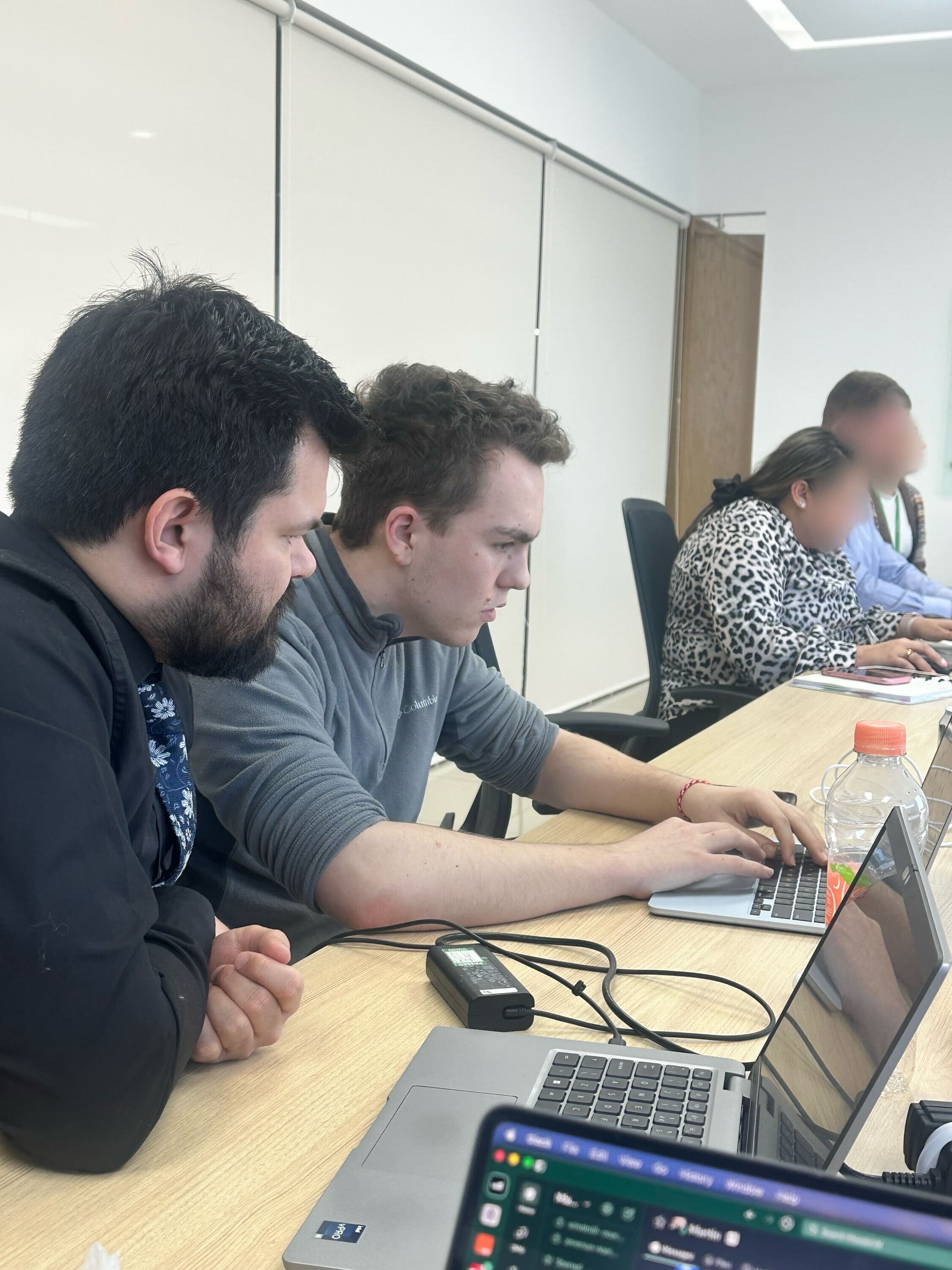
This is what shipping looks like for us - our engineers sitting next to procurement and supply chain managers, building and iterating in real time against real supplier communications and real production and delivery schedules.
Every feature in Mandel exists because we watched someone struggle without it. That proximity - to the problem, to the people, to the chaos of a real supply chain - is our advantage. It's why our product works in environments where most software fails.
What's Next
We've been applying patches to the problem for 50+ years - from supplier portals that just shift responsibilities from you to the supplier to ancient EDI integrations that keep breaking and need rewrites for every supplier.
It's time for a change.
Our vision is to create a world where supply chains coordinate themselves. Where AI agents handle the complexity of global trade communication, enabling every manufacturer and distributor in North America and Europe to focus on what they do best - creating and shipping revolutionary products.
Finally, A Note of Gratitude
I want to say a big thank you to the customers who took a bet on us early (some of you even before we had a product) - you let us sit with you, walk your factory and warehouse floors, and your trust and feedback are the biggest reasons we are here.
To my team - thank you for the late nights, the long flights to customer sites, and the sitting down directly with customers to understand what's actually breaking - building in this space is hard, and you are an example of how it's done.
To our investors and every angel who backed us - thank you for believing in us and the future we are working for here.
Let's build.